
What I'm Working On: Senior 2, and Tools That Keep Changing
I already have a 3D model of my house. I'm building another one anyway, because the tools have gotten a lot better since I made the first one. That keeps happening at work too.
I was recently promoted at OneStream from Senior 1 to Senior 2. I'm proud of that, and it gave me a reason to finally sit down and write an update here. I'm still leading an internal application at a large private SaaS company, and the promotion doesn't change the direction of the role. What has changed, in the few years since I became Senior 1, is how the work gets done. AI is a much bigger part of building software than it was. I'm still responsible for the application and the choices behind it while the tools underneath keep moving.
That shift shows up outside work too. It's in the home model, in my side business, and in a tablet game for my daughter. I want to start sharing these projects while they're still in progress, so this is the first of an occasional "what I'm working on" update.
Revisiting the home model
I'm using Astra to build the new model of my home. Compared with what I was getting out of Fable, it's lightyears ahead.
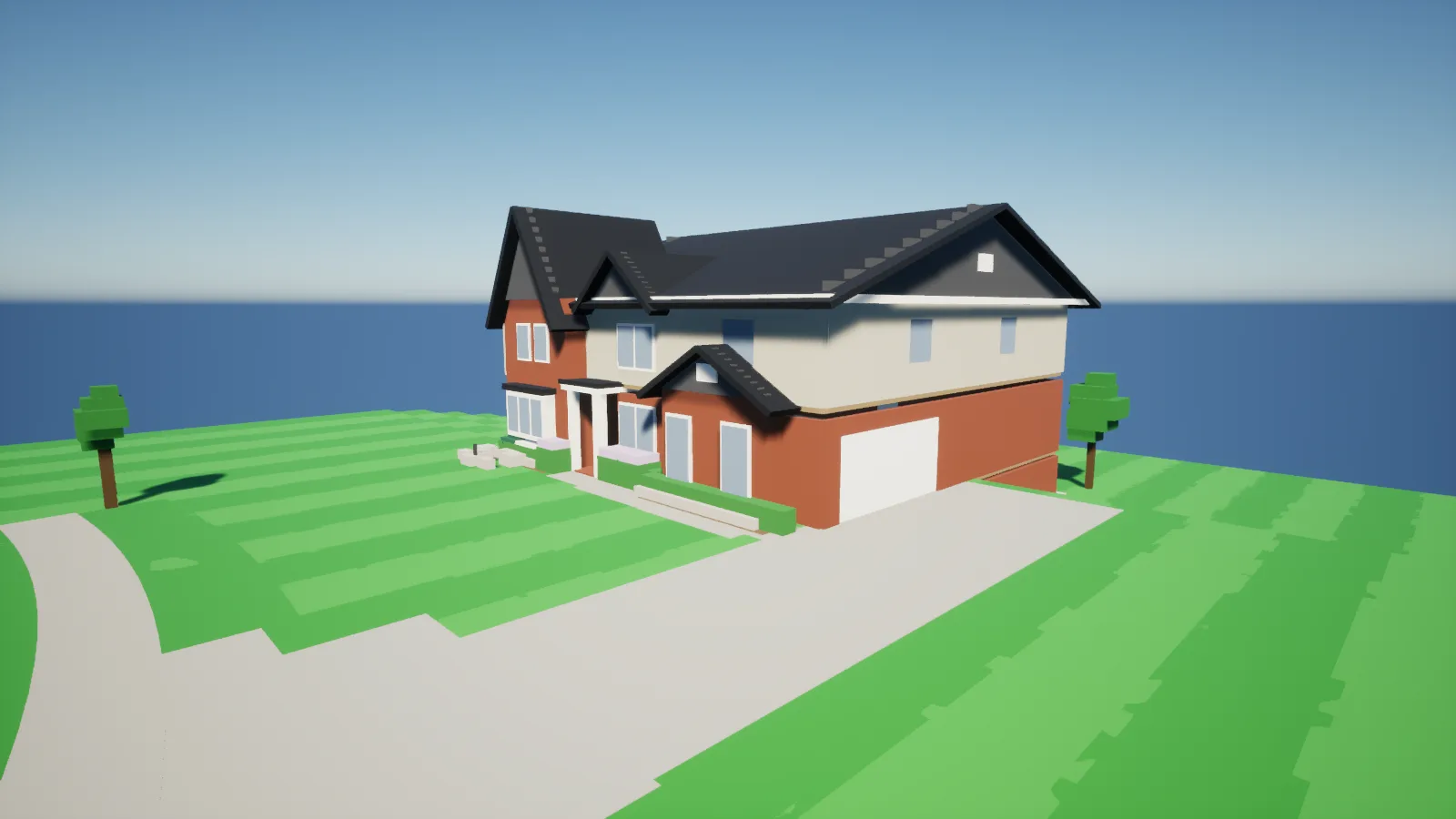
Earlier exterior model, rendered in Unreal.
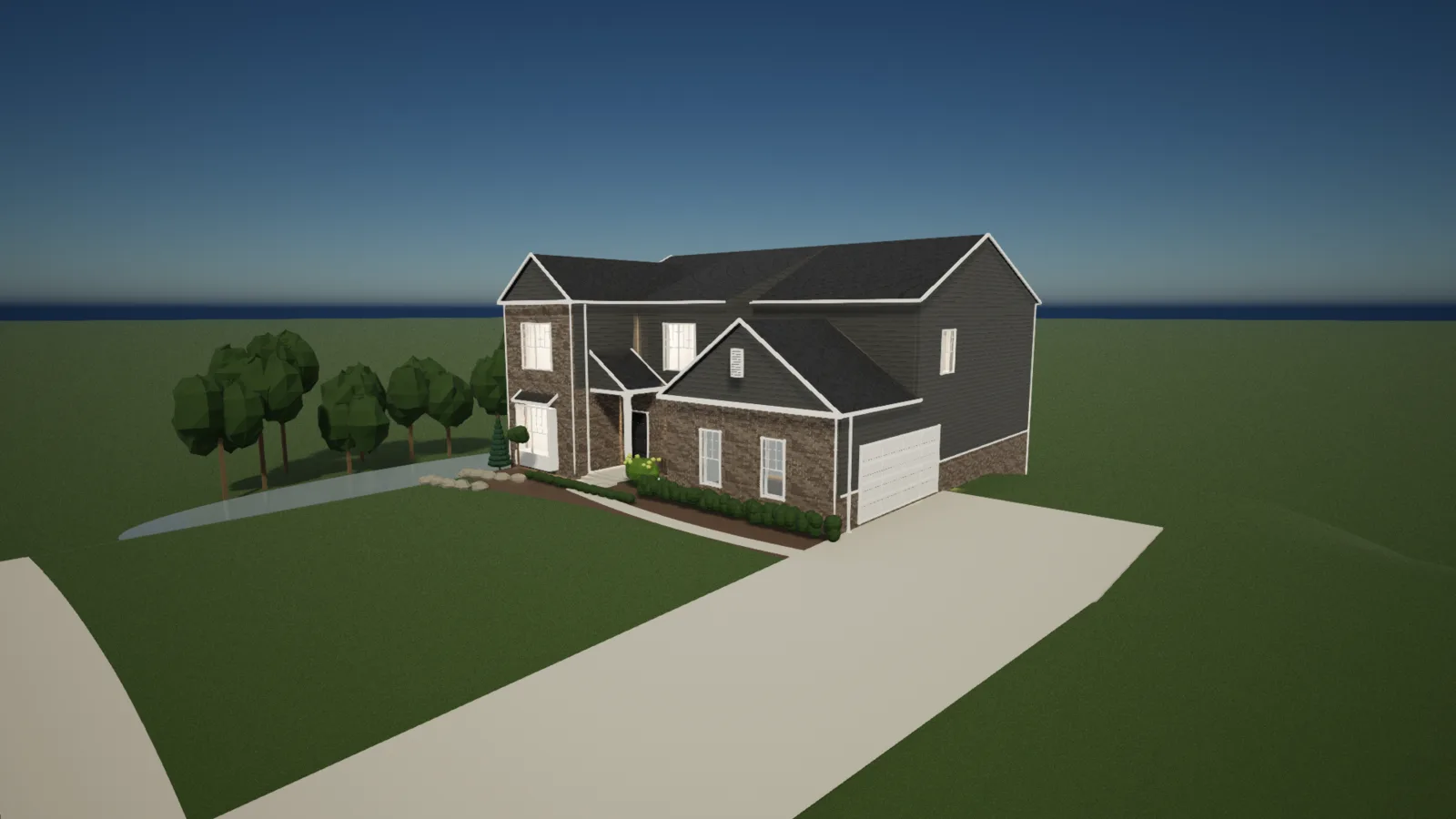
Revised exterior model. Both are renders of the 3D scene, with different framing and lighting.
The earlier version had the general shape of the house. In the newer one, the brick and siding look like brick and siding. The window trim is closer. The lawn looks like a yard instead of striped green terrain.
The two renders aren't a controlled comparison of the tools. The framing and lighting are different, and there's been plenty of correction between versions. The porch, the openings, and the way the ground falls around the house have all needed passes. This is a project where I can check the result against photos, or walk outside and look, so the mistakes are easy to spot. Getting them fixed is still part of the work.
I'm also using the model to work through ideas for the basement and my office. A better-looking render helps me think about an arrangement, but a plausible image doesn't settle a measurement. I'm still checking dimensions before I treat something that fits on screen as something that will fit downstairs. I want the desk to fit in the room as well as it fits in the model.
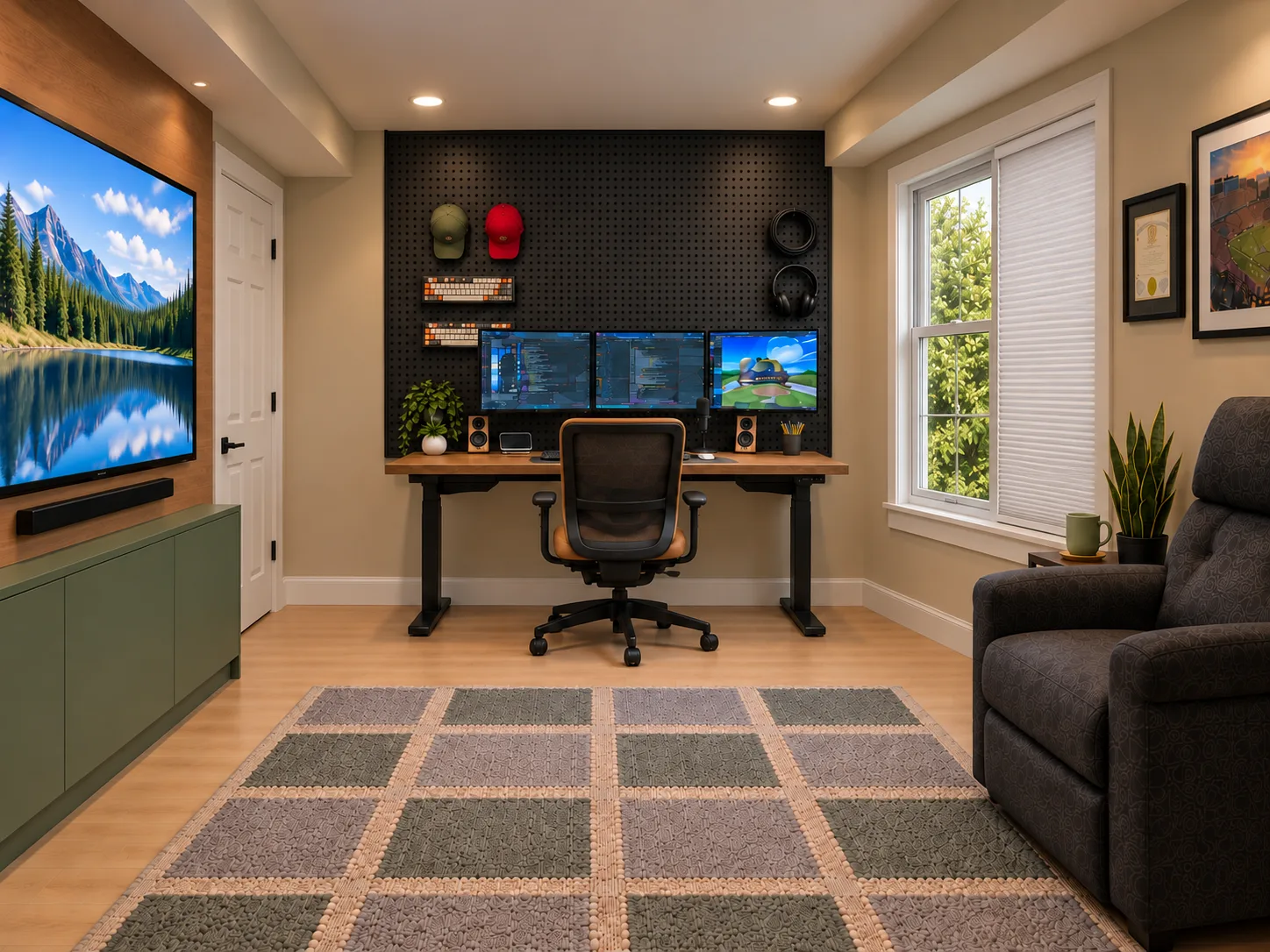
A concept view of the basement office, also from Astra. The desk and media unit sizes are measured. The picture is an illustration, not a plan.
That's a comfortable way for me to work with AI: make progress, look at the result, and use what I know about the thing I'm building to decide what needs another pass.
Giving DCS assistants useful context
For Duff Cloud Services, I'm working on agentic workflows. By that I mean giving an AI assistant access to the platform's tools, with enough context about a particular customer's site to help carry out a task.
DCS already builds and hosts customer websites. The platform has a CMS, booking, scheduled content posting, and social integrations, so the assistant has something specific to work with. Some of the pieces are already in place. Social copy can be generated from an existing blog post. Scheduled publishing works. The agent tools can inspect a site's content and analytics, including recommending blog topics based on search queries.
The workflow I want to connect starts with one of those topic suggestions. A customer could take it into a draft, review the post, and schedule it along with the social copy, with less moving between screens. Each step exists on its own today. What's missing is the assistant carrying the work from one step to the next.
The current agent tools are read-only. Reading the site's content helps the assistant understand what's already there, and search queries give it a basis for suggesting something to write about. Neither gives it the ability to save a change or put a post on the publishing schedule. Letting it change things is the next step, and I want to decide where the customer stays in the loop before I take it. Booking has its own possible workflows, with the same question attached: what gets handed off, and what stays with the customer.
The project I've enjoyed most
My favorite recent use of AI has been making games for my daughter to play on her tablet.
The current project is a small PAW Patrol world with an explorable map and seven activities. She can pick bridge pieces by shape and size, wash a muddy pup, or plant and water flowers.
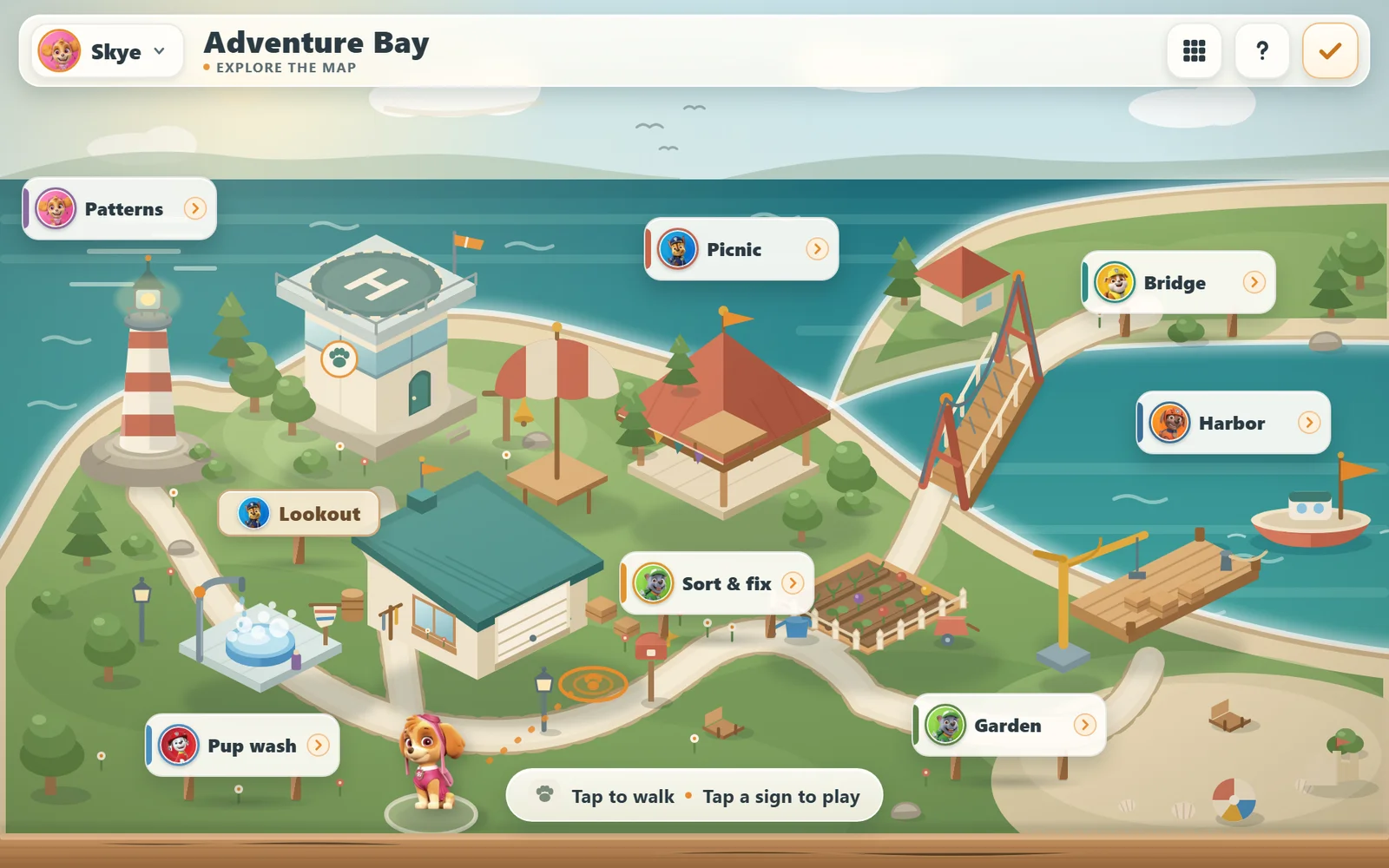
The Adventure Bay map. She taps anywhere to walk and taps a sign to play.
It's a family prototype. The characters move around using still poses, and there's plenty left to do on animation and sound.
The early versions gave me useful feedback anyway. She wanted the actual characters instead of the stand-in pups I started with. She understood the first activities but finished them quickly. That gave me something concrete to change, and more activities with more to do inside each one became a better use of time than polishing what was already there.
AI helps me build the app. The app itself runs offline, saves her progress, and doesn't need an account or a conversation with a model to let her play. There are no ads or purchases. Large touch targets and a visual "Show me" guide help her play without reading instructions. I still need to settle on better narration after the early robotic voice didn't work out, so for now it has a quiet mode.
I like having a project where I can tailor the next change to one person I know very well. Her feedback gives me a much smaller, clearer problem than guessing what a whole audience might enjoy.
Around the house
My wife has been building out meal plans for our family using AI, and I've been trying to help. Both of my parents have started using it in their real estate careers too. Their uses are a fair distance from writing software, and they've made AI a much more regular part of family conversations.
Home automation is still getting some attention as well. Our family calendars now feed into Home Assistant and a page on the home display, so household events, school things, and home tasks show up together. That's separate from the meal planning, but both put more of our everyday coordination in one place.
What I'm pointed at next
The DCS piece I want to get further with is connecting those individual steps into a workflow a customer can actually use: a topic from search traffic, a draft to review, a post and its social copy on the schedule. The game needs a voice. The house model needs its measurements checked before anything goes downstairs.
I'll put up the next one of these when that work has moved. I don't want to wait until a project is finished.
Comments (0)
No comments yet. Be the first to share your thoughts!
Leave a Comment
Sign in with Google, Microsoft, or email to leave a comment.